What Is White Chocolate? Is It Real Chocolate? (Complete Guide 2026)

White chocolate is one of the most misunderstood treats in the candy aisle. It is creamy, sweet, and melts beautifully, yet people still argue about whether it counts as "real" chocolate at all. Here is the short answer: traditional white chocolate is made from cocoa butter (the fat pressed from the cacao bean), milk, and sugar, but it contains no cocoa solids, which is why it is pale instead of brown. Plant-based versions, like our own, swap the dairy for plant-based ingredients, so the bar stays just as creamy with no milk at all. Either way it comes from the cacao bean, but it is missing the part that gives chocolate its classic dark color and flavor.
Below, we break down what white chocolate is made of, settle the "is it real chocolate" debate for good, explain why chocolate sometimes turns white, and show you how to choose a bar that tastes indulgent without the sugar crash.
What is white chocolate?
Traditional white chocolate is a confection made primarily from three ingredients: cocoa butter, a milk component, and a sweetener, with vanilla and sometimes a little lecithin to round things out. Plant-based bars, including Flèche's, skip the dairy and the lecithin entirely, and get their creaminess from plant ingredients. Ours, for instance, uses almond protein and cashew butter. Unlike milk or dark chocolate, white chocolate contains no cocoa solids (the brown, cocoa-flavored part of the bean), so it has a pale ivory color and a rich, buttery, vanilla-forward taste instead of a roasted cocoa one.
What actually makes it real white chocolate is the cocoa butter. To be sold as white chocolate, rather than a "white confection" or "candy coating," a bar needs a high share of real cocoa butter, at least 20%. That cocoa butter is what ties it back to the cacao bean, no matter what else is or is not in the recipe.
What is white chocolate made of?
Authentic white chocolate has a short ingredient list:
- Cocoa butter (at least 20%): the pale yellow fat extracted from cacao beans. This is the ingredient that ties white chocolate back to the cacao tree, and it is what gives the bar its silky melt.
- Milk, or a plant-based swap: traditional bars use dairy milk powder, which adds creaminess and a subtle caramel note. Plant-based bars skip the dairy completely. Some use coconut or oat milk powder, while ours builds its creaminess from almond protein and cashew butter, with no milk of any kind.
- Sugar or sweetener: conventional bars rely on cane sugar, which is why standard white chocolate tastes so sweet. Better-for-you bars use sugar alternatives like allulose.
- Vanilla, and lecithin only if needed: vanilla deepens the flavor. Lecithin is an optional emulsifier that keeps things smooth. Many bars add a little, but it is not essential, and plant-based bars like ours leave it out.
Notice what is missing: cocoa solids and cocoa liquor. That single absence is the source of nearly every white chocolate debate.

Is white chocolate real chocolate?
This is the question everyone asks, and the honest answer is that it depends on how you define chocolate.
- If "chocolate" means it comes from the cacao bean, then yes, white chocolate is real chocolate. Cocoa butter is pressed directly from cacao beans, so white chocolate shares a genuine ingredient with milk and dark chocolate.
- If "chocolate" means it contains cocoa solids (the brown part responsible for that classic chocolate taste and most of the antioxidants), then no, white chocolate does not qualify.
So when people ask "is white chocolate actually chocolate" or "is white chocolate really chocolate," they are picking up on a fair point: it lacks cocoa solids. It is made from a part of the cacao bean, just not the part that makes chocolate taste like chocolate. Legally, in both the US and EU, it is allowed to be sold as "white chocolate," so by regulation it earns the name. By flavor and chemistry, it is its own distinct category.
Why doesn't white chocolate taste like chocolate?
Cocoa solids carry both the color and the signature cocoa flavor. Remove them and you remove the bitterness and the deep brown hue, leaving only the cocoa butter's mild, creamy richness plus milk and sugar. That is why white chocolate tastes more like sweetened vanilla cream than like a dark chocolate bar.
White vs milk vs dark chocolate: how they compare
| Feature | White (traditional) | Flèche white chocolate | Milk | Dark |
|---|---|---|---|---|
| Cocoa solids | None | None | About 10 to 50% | 50 to 90% |
| Cocoa butter | Yes (20%+) | Yes (20%+) | Yes | Yes |
| Milk | Yes | No, plant-based | Yes | Usually none |
| Lecithin | Often | No | Often | Sometimes |
| Refined sugar | Yes | No, allulose | Yes | Varies |
| Color | Ivory | Ivory | Light brown | Deep brown |
| Flavor | Sweet, creamy, vanilla | Creamy, vanilla, less sweet | Sweet, mellow | Bold, slightly bitter |
| Antioxidants (flavanols) | Minimal | Minimal | Some | Highest |
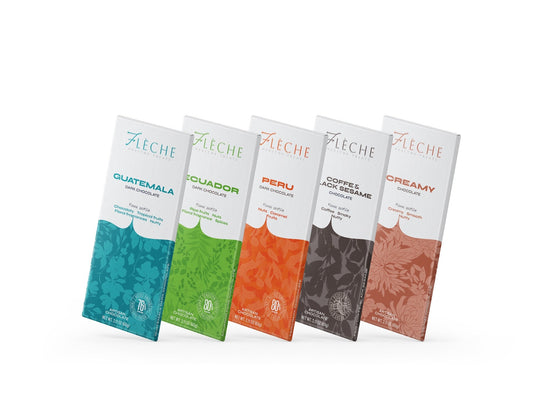
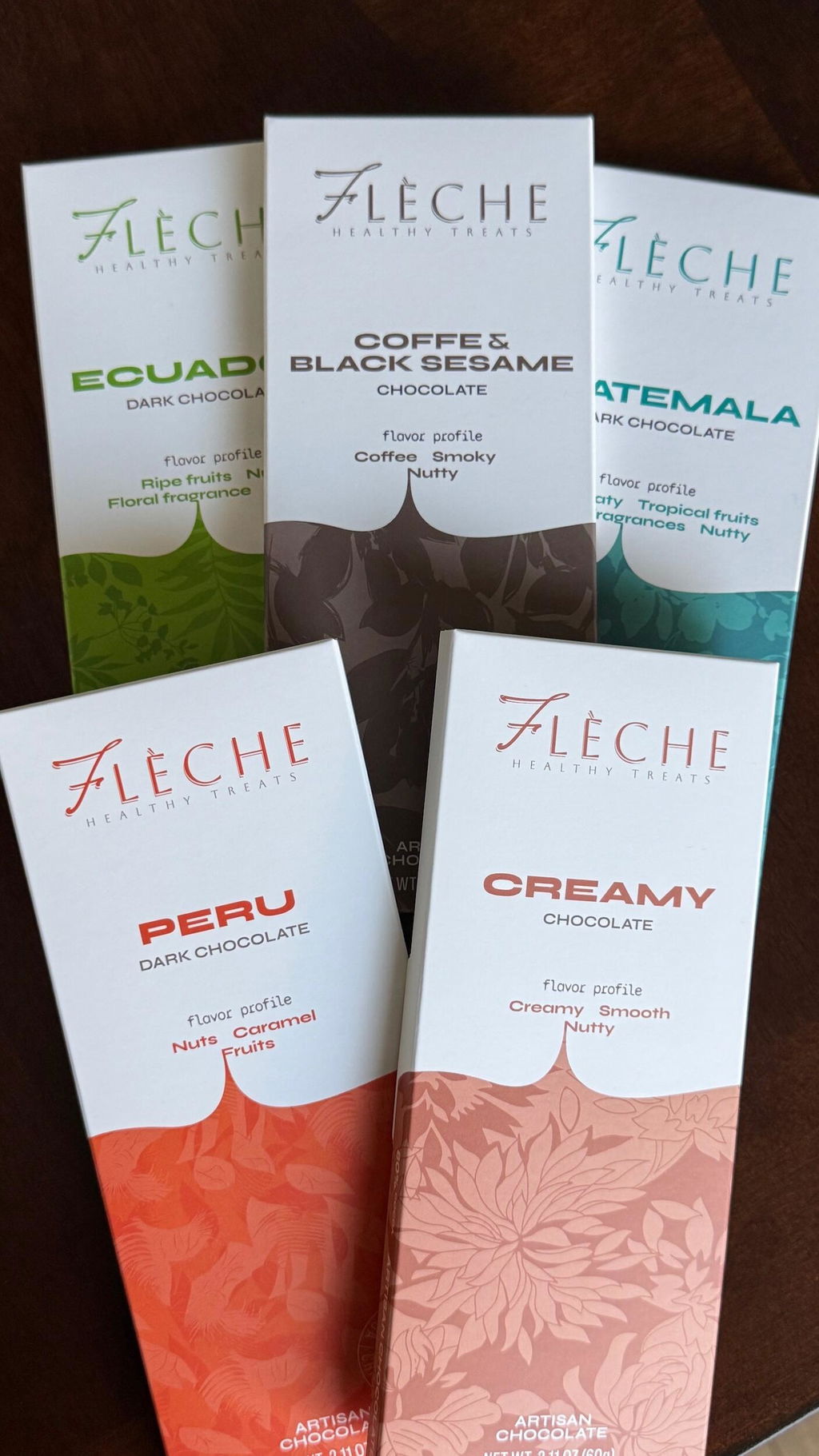
If you love the deep, cocoa-rich end of the spectrum, a single-origin bar like our Peru 80% dark chocolate sits at the opposite end from white.
[product=vegan-sugar-free-80-dark-chocolate-peru-fleche]Crafted from premium Peruvian cacao, this 80% dark chocolate delivers bold intensity, natural fruit brightness, and smooth depth — without added sugar, without dairy, and without artificial flavors.[/product]
Why does chocolate turn white?
Sometimes a regular chocolate bar develops a chalky white or gray film, and people wonder if it has somehow turned into white chocolate. It has not. That coating is called bloom, and there are two kinds:
- Fat bloom: when chocolate gets warm, some cocoa butter melts, rises to the surface, and recrystallizes as pale streaks. This is common after a bar sits in a hot car or a sunny window.
- Sugar bloom: when chocolate meets moisture or condensation, sugar on the surface dissolves and then recrystallizes into a gritty white layer.
Bloomed chocolate is still safe to eat. It just looks dull and may feel grainy. To prevent it, store chocolate in a cool, dry place around 60 to 68°F, away from the humidity of the fridge. In other words, "why does chocolate turn white" is really a storage question, not a sign your bar became white chocolate.
Frequently asked questions
Is white chocolate healthier than milk chocolate?
Not usually. Because white chocolate has no cocoa solids, it misses out on the flavanols and antioxidants that give dark (and to a lesser degree milk) chocolate its health halo, and standard versions are high in sugar. That said, "healthier" depends on the bar. A sugar-free white chocolate sweetened with allulose can have far less impact on your blood sugar than a conventional milk chocolate loaded with cane sugar. The ingredient list matters more than the color.
Is white chocolate vegan?
Traditional white chocolate is not vegan, because it contains dairy milk solids. Plant-based white chocolate does exist, though: it replaces the dairy with ingredients like coconut or oat milk powder while keeping the cocoa butter. Our own sugar-free white chocolate is both vegan and dairy-free, made creamy with almond protein and cashew butter instead of milk, so you get the indulgent taste with no animal products.
Why does white chocolate cost more?
Cocoa butter is expensive. It is the premium fat pressed from cacao beans, and because real white chocolate is made of so much of it (at least 20%, often more), the raw-material cost runs higher than a milk bar that is bulked up with cheaper cocoa solids and sugar. Quality bars also use real vanilla and skip artificial fillers, which adds to the price.
Can you melt white chocolate?
Yes, but gently. White chocolate is more heat-sensitive than dark because of its high milk and sugar content, both of which scorch easily. Melt it slowly in a double boiler or in short microwave bursts at 50% power, stirring often, and never let it climb past about 110°F. Overheated white chocolate seizes into a grainy clump. Smoothly melted white chocolate is perfect for drizzling, dipping, or stirring into a warm mug, which is exactly what you do in a white hot chocolate.

What is the best brand of white chocolate?
The best white chocolate comes down to two things: a high cocoa butter content (so it actually qualifies as real white chocolate) and a clean sweetener (so it does not spike your blood sugar). Mass-market names like Lindt and Ghirardelli score well on creaminess but lean very sweet. If you want the indulgence without the sugar, Flèche's sugar-free white chocolate uses cocoa butter and allulose instead of cane sugar, so it stays vegan, keto-friendly, and low-glycemic.
A creamier white chocolate, without the sugar crash
At Flèche Healthy Treats, we make our sugar-free white chocolate the way it should be: real cocoa butter for that velvety melt, no refined sugar, no dairy, and no lecithin, it is 100% plant-based. It is naturally sweetened with allulose, so it is keto-friendly, low-glycemic, and gentle enough for a diabetic-friendly lifestyle, while still tasting like the creamy treat you remember.
[product=fleche-white-chocolate]Our sugar free white chocolate is crafted for those who crave creamy white chocolate flavor without the added sugar. Smooth, rich, and naturally sweetened, this bar delivers the classic sweetness you love — reimagined for a cleaner, smarter indulgence.[/product]
And skipping the milk is not a compromise, it is the point. Traditional white chocolate leans on dairy milk solids, which make it heavy and very sweet and leave out anyone who is vegan or sensitive to dairy. We build ours on cocoa butter, almond protein, and cashew butter instead, sweetened with allulose and finished with a little chicory-root fiber and baobab. You still get the creamy, vanilla taste, the cocoa butter comes through cleaner, the ingredient list stays short and fully plant-based, and far more people can enjoy it.
- Curious how it goes from cacao bean to bar? Read how white chocolate is made.
- Prefer the classic cocoa taste? Compare it with our vegan milk chocolate.
The bottom line
White chocolate is real in the sense that it is built on cocoa butter from the cacao bean, but it contains no cocoa solids, which is why it is pale, sweet, and milder than milk or dark chocolate. It is not a health food in its conventional form, but a sugar-free, plant-based version lets you enjoy the creamy indulgence with far less compromise.